
The Cold Water Sandwich Problem Explained
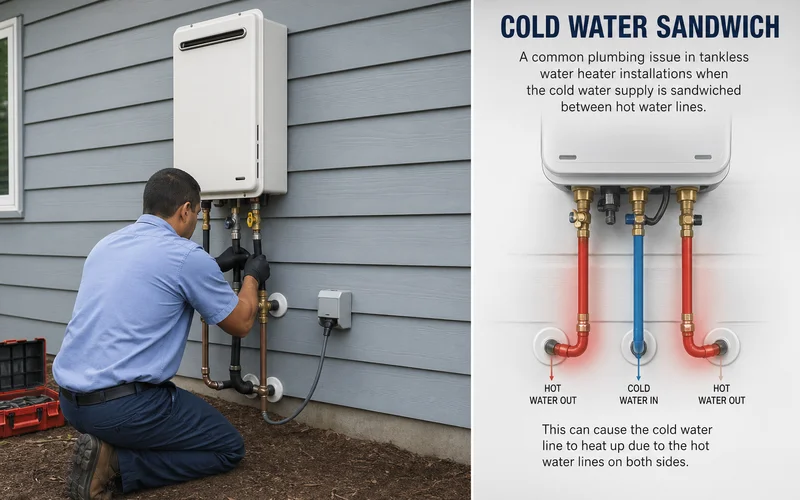
What causes the 'cold water sandwich' tankless quirk — and why it's normal, not a defect. Recirculation pumps and mini-tank buffers that solve it.
5 min read
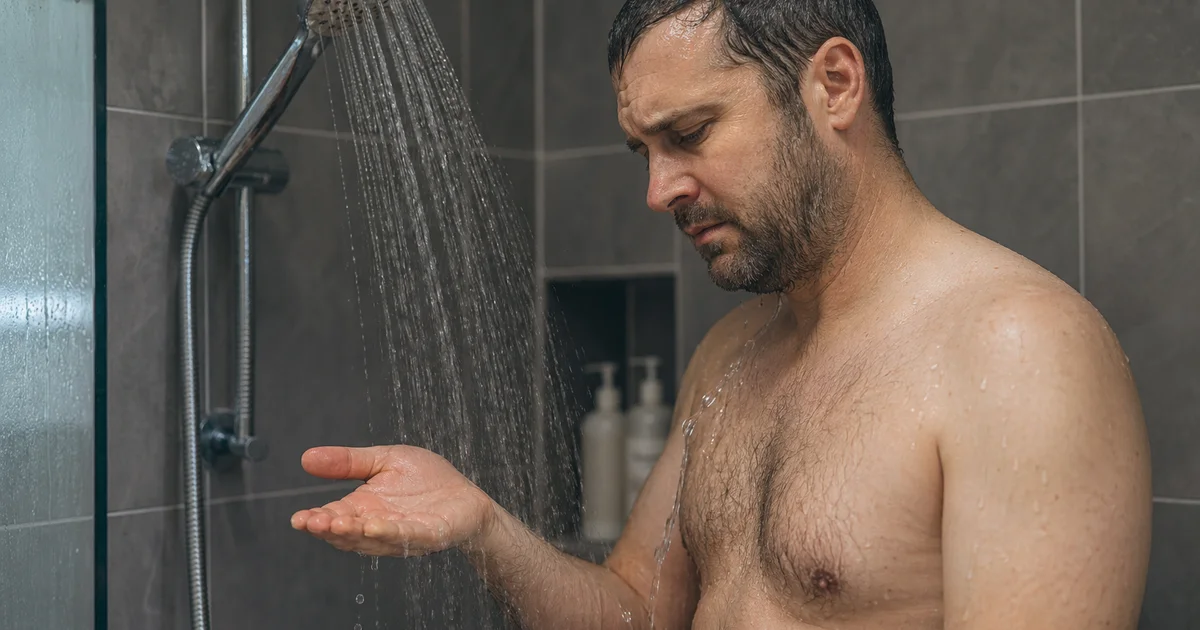
We hear from property owners every week who panic when they experience the cold water sandwich tankless issue.
A hot shower runs perfectly for ten seconds, turns freezing cold for five seconds, and then gets hot again. Our team usually has to explain that the unit is not actually broken.
This brief chill is simply the inherent physics of heating water strictly on demand. We understand that experiencing this thermal lag during a morning routine is incredibly frustrating.
Here is a breakdown of exactly why this lag happens and how to permanently fix it.
What’s Actually Happening With The Cold Water Sandwich Tankless Lag
A cold water sandwich happens because standard units shut down when you pause the water flow, allowing unheated water to slip into the piping. Tank models hold 50 gallons of pre-heated water to create a constant thermal buffer.
Our technicians always explain the mechanical sequence to clear up the confusion. A standard tankless system only heats water on demand as it moves through the heat exchanger.
We see this exact process happen every time a tap is opened:
- Cold water clears out: Unheated water sitting in the line flows out first, which takes about 5 to 15 seconds.
- The burner fires: The unit detects flow at a specific threshold, usually around 0.40 gallons per minute (GPM), and activates the burner.
- Hot water arrives: The first surge of newly heated water reaches the showerhead.
Our customers usually notice the problem when they turn off the water briefly to lather up with soap. The unit shuts down immediately to save energy.
We can trace the sandwich effect through the remaining steps:
- Residual heat stays: The heated water already in the pipe remains hot.
- Flow restarts: You turn the tap back on, and that residual hot water hits you first.
- The cold gap arrives: The water that entered the heater during the pause wasn’t heated, creating the dreaded cold sandwich layer.
- Heat returns: The burner re-fires, and a fresh supply of hot water finally arrives.
Our service data shows that the average US home has a 50-foot pipe run to the master bathroom. A longer pipe creates a much wider gap of unheated water.
Why The Cold Water Sandwich Tankless Issue Is Worse in Some Homes
Certain plumbing layouts and usage habits make a tankless cold water surge much more pronounced. Homes with the heater installed near the primary bathroom usually experience zero issues.
Our installers frequently see three main factors that amplify the cold gap:
- Extended pipe runs: Pushing hot water from a basement utility room up to a second-floor bathroom adds significant travel time.
- Stop-start habits: Turning the shower faucet on and off rapidly forces the burner to cycle constantly.
- Low-flow fixtures: Modern US EPA WaterSense showerheads restrict output to 2.0 GPM.
We know that a lower flow rate means the water simply moves slower through the plumbing. The cold unheated gap takes much longer to pass through a restricted showerhead.
Our team recommends evaluating your home’s footprint before picking a water heating strategy. A massive sprawling floor plan practically guarantees a noticeable lag without extra equipment.
The Three Solutions
You can eliminate the sandwich effect completely by installing a recirculation pump, choosing a built-in buffer model, or adding a mini-tank. The best approach depends on your current plumbing and your budget.
Our plumbing experts evaluate these three specific workarounds for residential properties. Each method attacks the cold water gap differently and carries a unique price tag.
We compiled a quick comparison of the three primary fixes to help you decide:
| Solution Type | Average Cost | Best For |
|---|---|---|
| Recirculation Pump | $300 to $1,000 | Retrofitting existing long pipe runs |
| Built-In Recirculation | $300 to $500 premium | New installations or full unit replacements |
| Mini-Tank Buffer | $200 to $400 | Under-sink isolation for a single bathroom |
Option 1: Add a Recirculation Pump
A dedicated pump constantly circulates hot water through your supply lines so nothing cools down in the pipes. This is the most effective retrofit for an existing installation.
Our preferred fix is adding an external system like the Grundfos UP15-10SU7P TLC. This stainless steel pump runs on a timer to keep water primed during your morning routine.
We typically quote about $300 to $400 for the parts, bringing the total installed cost just under $1,000. The pump eliminates the cold gap entirely and saves thousands of gallons of wasted water annually.
Option 2: Upgrade to a Built-In Recirculation Model
Some premium units handle the problem internally without needing any external plumbing modifications. The Navien NPE-A2 series utilizes proprietary ComfortFlow technology to solve the issue.
Our clients love this option because it features an internal buffer tank and a built-in recirculation pump. You pay a slight unit premium of about $300 to $500 upfront, but you skip the separate pump installation.
We highly recommend reviewing our best tankless brands guide for a complete breakdown of built-in options. High-end brands max out around 11.2 GPM, providing plenty of consistent heat for large households.
Option 3: Install a Mini-Tank Buffer
A localized electric mini-tank acts as a thermal sponge between your main heater and the faucet. This small reservoir absorbs the cold water surge before it reaches your showerhead.
Our technicians frequently install a 2.5-gallon Bosch Tronic 3000 T directly under the bathroom sink. The mini-tank blends the unheated lag water with stored hot water to mask the temperature drop.
We find this is a highly cost-effective strategy, usually running between $200 and $400 for the hardware. A mini-tank is much cheaper than running new return lines, though it does require dedicated under-sink cabinet space.
When It Indicates a Real Fault
A cold gap that has existed since day one is just normal physics that requires a plumbing modification. A sudden drop in temperature on an older unit usually points to a mechanical failure.
Our repair logs show that hard water is the leading cause of sudden temperature drops. The United States Geological Survey reports that 85 percent of US homes have hard water, which rapidly builds up inside the piping.
We often find several common culprits behind a sudden tankless temperature fluctuation:
- Heavy scale buildup: Mineral deposits severely coat the heat exchanger and slow down its response time.
- Degraded flow sensors: A faulty sensor causes the burner to activate intermittently, dumping unheated water into the line.
- Modulating burner failures: The gas valve struggles to maintain a consistent flame during usage.
Our licensed crews can run diagnostics if your temperature swings just started happening out of nowhere. You can schedule a visit through our tankless repair service page to get the system checked.
We know how frustrating a bad shower is, so a simple tune-up might be all you need. Give our team a call today to permanently eliminate your cold water sandwich tankless problems.
Frequently Asked Questions
Is cold water sandwich a defect?
Will a recirculation pump waste energy?
Does this happen with every tankless?
Related Guides
Common Tankless Water Heater Problems and Signs You Need Repair
Mid-shower shutdowns, weird noises, low pressure, scaling — when each tankless symptom is a quick fix vs serious repair. Urgency level for each.
DIY vs Professional Tankless Repair (What's Safe to Tackle)
Filter cleaning and basic resets are DIY-friendly. Gas, combustion, and heat exchanger work require a licensed plumber — and DIY voids most warranties.
Tankless Water Heater Repair vs Replacement (Decision Guide)
When to fix vs replace a tankless: the 50% rule, age threshold, failure modes that always mean replacement. Honest decision framework with examples.
Tankless Water Heater Error Codes Explained (All Brands)
Common tankless error codes by brand: Rinnai 11/12, Navien E001/E003, Noritz, Rheem. What each code means, basic resets, and when to call a tech.