
Electric to Gas Tankless Conversion
Electric-to-gas conversions are the most expensive scenario — typically adding $1K-$2K. Why it still pencils out, what's involved, and propane as an alternative.
6 min read
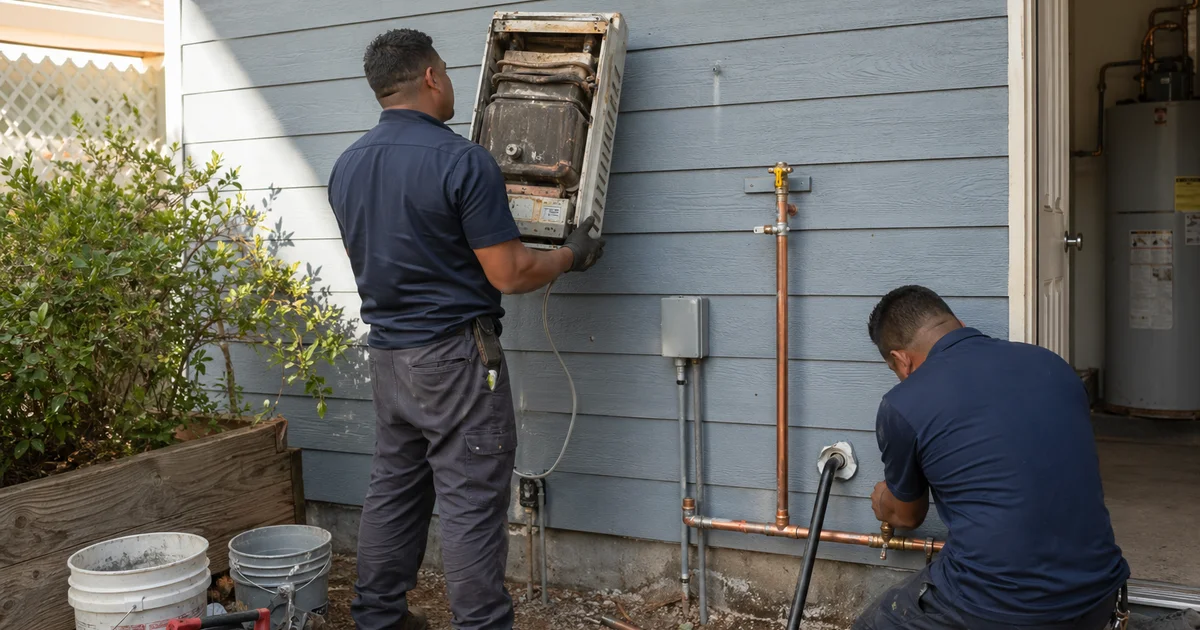
We often see clients surprised by the sheer scope of moving from electric to gas water heating. This upgrade involves far more than simply swapping out a tank. You are fundamentally changing your property’s utility infrastructure.
Our experts consistently note that this project runs $1,000 to $2,000 higher than a standard gas-to-gas replacement. The long-term operating savings usually justify the upfront investment if you have an accessible gas main.
Let’s walk through the specific infrastructure changes, crunch the 2026 cost data, and establish a clear framework for deciding if this electric to gas tankless conversion makes financial sense.
What’s Different About Electric-to-Gas
We consider an electric-to-gas switch to be a major infrastructure overhaul. A standard gas-to-gas swap relies heavily on existing pipes and flues. Converting from electric requires building the gas delivery system completely from scratch.
Our installation process adds several mandatory steps that drive up the final price. The requirements include a few costly upgrades:
- New gas line run: Interior Corrugated Stainless Steel Tubing (CSST) piping averages $22 to $35 per linear foot, while underground exterior polyethylene lines run $28 to $42 per foot in 2026.
- Venting from scratch: Condensing models from brands like Navien use affordable PVC pipe, while non-condensing units often require expensive stainless steel venting.
- Gas meter upgrade: Your utility company must verify if the existing meter can handle the combined demand of a new high-BTU appliance.
- Combustion air supply: Local inspectors require verification that your space has adequate airflow to meet modern building codes.
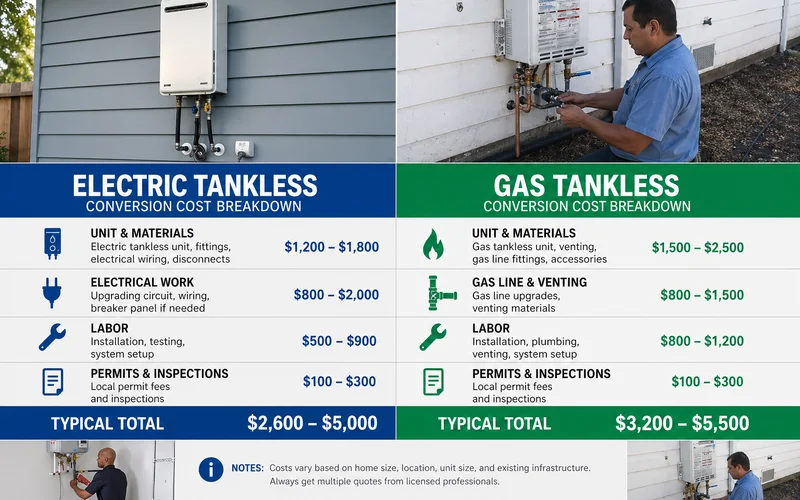
These variables push the total project cost to anywhere from $6,500 to $11,000. Our teams always evaluate the complexity of the gas service install to narrow down that estimate. Complex exterior trenching will naturally push you toward the higher end of that range.
When It Still Pencils Out
We calculate the real value of this project over a decade of ownership. Standard electric water heating typically costs a household $400 to $700 annually. A high-efficiency gas tankless unit drops that yearly expense to between $200 and $400.
Our clients usually recover the conversion premium within 8 to 12 years through this annual reduction. You also avoid the cost of buying a second traditional tank when the first one fails around year 12.
| Heating Method | Average Annual Cost | 12-Year Projected Expense |
|---|---|---|
| Standard Electric Tank | $400 - $700 | $4,800 - $8,400 |
| High-Efficiency Gas Tankless | $200 - $400 | $2,400 - $4,800 |
We also factor in federal incentives to accelerate that payback period. The 2026 Energy Efficient Home Improvement Credit offers up to $600 for qualifying high-efficiency gas models. Taxpayers must now provide a specific Qualified Manufacturer code on their return to claim this money.
Our cost analysts find that stacking these credits with local utility rebates shrinks the break-even point to just 6 to 9 years. This accelerated timeline makes the investment highly attractive for long-term property owners.
When It Doesn’t
We advise against this conversion in a few specific scenarios. Sometimes, sticking with a traditional tank or exploring an electric to gas tankless alternative is simply the smarter financial move. The following situations usually ruin the return on investment:
- No gas service at the curb: Running a new main line from the street to your meter easily costs $2,000 to $10,000 in utility tap fees alone.
- Single-occupant households: Low-usage homes simply do not generate enough monthly energy savings to offset the massive upfront installation cost.
- Short ownership horizon: Moving out in under five years guarantees you will not recover the premium paid for the gas infrastructure.
- Insufficient electrical panel: Going electric tankless requires massive power, often needing three or four dedicated 40-amp breakers.
Our technicians always audit your existing electrical panel capacity before recommending an electric tankless alternative. A heavy-up panel upgrade can easily wipe out any savings you gained by avoiding the gas line installation.
Propane as an Alternative
We recommend looking at liquid propane if your rural property lacks natural gas access. This fuel serves as a highly effective middle ground for off-grid properties.
Quick Fact: Propane burns much hotter than natural gas, delivering roughly 91,500 BTUs per gallon.
Our recent pricing data shows propane operating expenses run about twice as high as natural gas in most 2026 markets. The initial installation mirrors a natural gas setup, but you must add $500 to $1,200 for an outdoor storage tank. You also have to manage the logistics of scheduling regular truck deliveries.
Our team created a detailed propane vs natural gas tankless comparison to help you weigh these specific trade-offs. Analyzing local delivery fees is a crucial step before you convert electric to gas water heater systems using propane.
Decision Framework
We use a straightforward logic tree to guide our clients toward the right system. Your specific property infrastructure will dictate the best path forward. Reviewing your local utility options is the absolute first step.
Our installers suggest converting immediately if natural gas is already at the curb and you plan to stay in the building for seven or more years. A home without street gas requires weighing a rural propane setup against an electric tankless system. An electric tankless unit remains the cleanest answer if your current electrical panel supports the load without an expensive upgrade.
We detail all the pricing variables in our complete tankless installation cost breakdown. Every property presents unique challenges that require professional assessment.
Our specialized installation service audits all three of these paths during a free virtual estimate. This comprehensive review ensures you make the most cost-effective choice for your property.
Frequently Asked Questions
Is electric to gas conversion worth it?
Can I just go to electric tankless instead?
What if there's no gas line at the curb?
Related Guides
Condensing vs Non-Condensing Tankless: Which Is Right?
Condensing tankless units run 90%+ efficient with cheap PVC venting; non-condensing are 80-85% with stainless flue. Total-cost-of-ownership math inside.
Gas Line Requirements for Tankless Water Heater Installation
Tankless units need a 3/4 inch gas line in most cases — your existing 1/2 inch line probably won't work. Here's how to know if you need an upgrade and what it costs.
How to Choose a Tankless Water Heater Installer
Questions to ask, red flags to avoid, and certifications that matter when picking a tankless installer. Why the cheapest quote is usually a warning.
Propane vs Natural Gas Tankless Water Heater Comparison
When to choose propane (no natural gas line available), how operating costs compare, BTU output differences, and unit compatibility for both fuels.