
Gas Line Requirements for Tankless Installation
Tankless units need a 3/4 inch gas line in most cases — your existing 1/2 inch line probably won't work. Here's how to know if you need an upgrade and what it costs.
6 min read
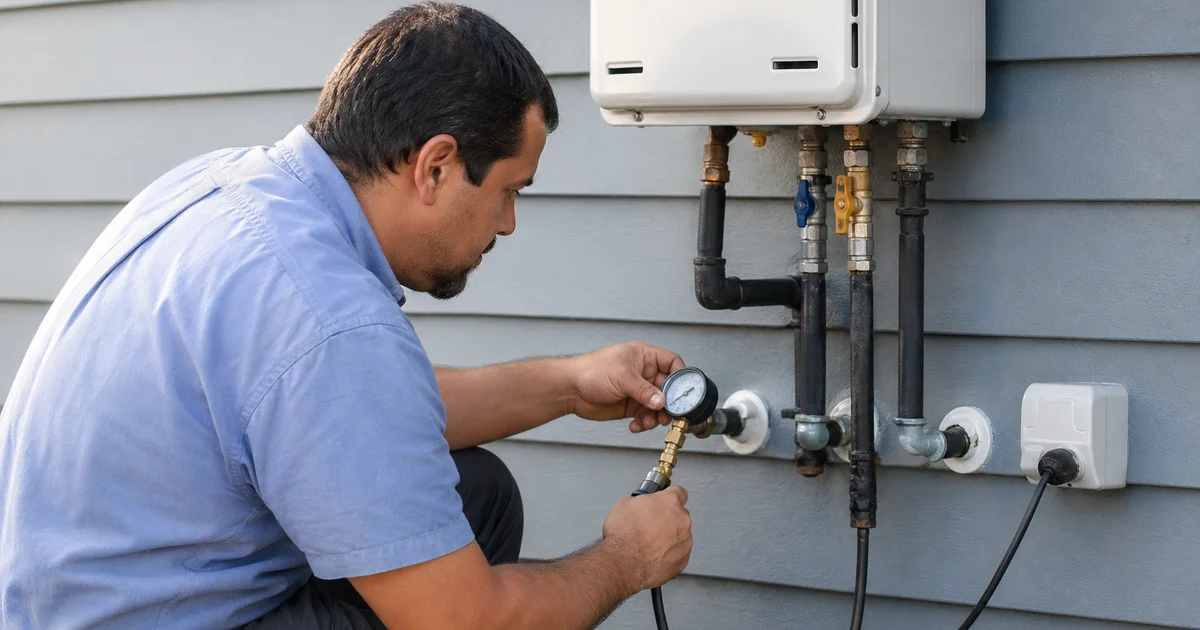
We see the gas requirements catch homeowners off guard on almost every first-time conversion. Installing a proper gas line for tankless water heater operation is a completely different ballgame than swapping an old tank. A standard storage water heater only draws about 40,000 BTUs per hour, which easily runs on a standard half-inch pipe.
Our technicians find that a modern tankless system demands between 150,000 and 199,000 BTUs per hour. This massive jump usually exceeds the capacity of an older home’s existing setup. We want you to have the complete picture before you start pulling permits.
Otherwise, a project that initially looks like a $5,500 investment quickly balloons to $7,200 once the plumbing modifications begin. Let’s look at the National Fuel Gas Code requirements, review the hard numbers on pipe capacity, and explore exactly what an upgrade entails.
Gas Line BTU Capacity
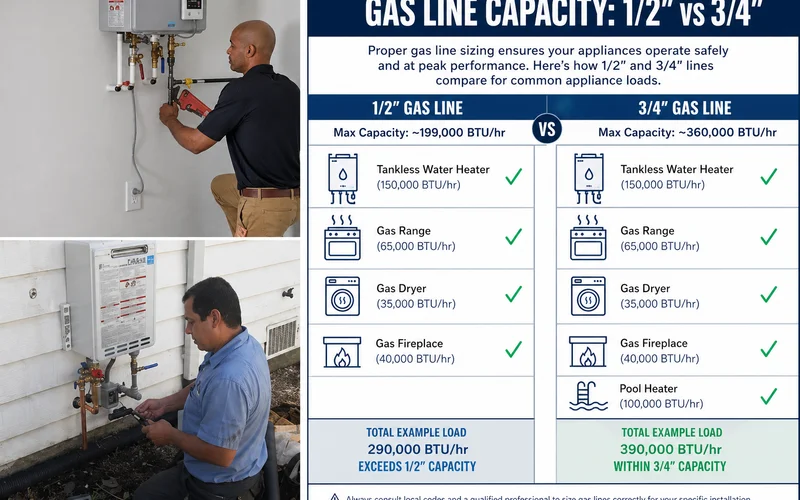
Our teams rely on the sizing charts published in the International Fuel Gas Code to determine the correct tankless gas line size. Natural gas is typically delivered to residential homes at a standard pressure of seven inches of water column.
The physical diameter of the pipe restricts how many BTUs can travel from the meter to the appliance at that pressure. Friction slows the gas down as the pipe gets longer.
We measure this resistance in “equivalent feet” because every elbow or tee fitting adds friction to the calculation. A pipe might measure twenty feet long, but the fittings can make it act like a thirty-foot run.
| Gas Line Size | BTU Capacity (10 ft run, natural gas) | BTU Capacity (50 ft run) |
|---|---|---|
| 1/2 inch | ~110,000 BTU/hr | ~55,000 BTU/hr |
| 3/4 inch | ~230,000 BTU/hr | ~115,000 BTU/hr |
| 1 inch | ~440,000 BTU/hr | ~220,000 BTU/hr |
Looking at the table makes the math incredibly clear. A typical 199,000 BTU tankless heater sitting thirty equivalent feet from the meter absolutely requires a three-quarter-inch line minimum.
Our installers sometimes recommend stepping up to a full one-inch pipe if you plan to add high-demand appliances later. Whole-home generators or pool heaters will easily max out a smaller system.
When Existing 1/2 Inch Works
Our service calls confirm that a half-inch pipe almost never supports a modern residential unit. The debate of 1/2 vs 3/4 gas line tankless requirements usually ends with needing the larger pipe.
You can only safely rely on the smaller pipe under two extremely specific conditions:
- Very short run (under 8-10 feet): This setup only works if there are no other gas appliances pulling fuel from the same branch line.
- Smaller 140,000 BTU models: Some manufacturers build retrofit-specific units with negative pressure gas valves to draw enough fuel. These specialized heaters only make sense in a single-bathroom home with very low hot water demand.
We always advise homeowners to plan for a three-quarter-inch upgrade in every other scenario. Attempting to force high gas volume through a small pipe leads to ignition failures and constant error codes.
Typical Upgrade Cost Drivers
We typically see a gas line upgrade tankless project range anywhere from $350 to $2,000 depending on the complexity of your home. Several distinct factors will dictate your final installation bill.
The exact price tag always comes down to these specific variables:
- Run length and accessibility: The total distance from the meter directly impacts material and labor expenses. An exposed run across an unfinished basement ceiling costs far less than snaking a new line behind finished drywall.
- Pipe material differences: Black iron is the traditional standard at roughly $5 to $9 per foot for materials, but it requires intensive labor to thread every joint. Corrugated Stainless Steel Tubing (CSST) costs $2 to $5 per foot and bends easily, significantly reducing your total labor charges.
- Meter upgrades: Your local utility provider might need to install a larger gas meter if your current one caps out at 250 cubic feet per hour.
- Code requirements: Specific municipal jurisdictions often mandate extras like sediment traps, accessible manual shut-off valves, or specific electrical bonding for CSST lines.
Signs Your Existing Line Is Already Undersized
Our technicians often spot warning signs of a maxed-out gas system before we even begin a formal inspection. Your house might already be dropping hints that the current piping infrastructure is struggling.
You should watch for these common appliance performance issues:
- The stove flame drops: Watch the burner flame closely. If it shrinks exactly when the furnace kicks on, your internal gas pressure is plummeting under the combined load.
- Slow recovery times: Pay attention to your hot water. A standard tank taking forever to warm up while the clothes dryer runs points to severe gas starvation.
- Audible clicking sounds: Listen to the gas pressure regulator. A repetitive clicking noise means the meter is physically struggling to handle sudden demand spikes.
We recommend checking the data plates on your existing appliances to calculate your total home BTU load. A standard residential gas meter usually maxes out at 250,000 BTUs. Adding a 199,000 BTU unit on top of a central furnace and stove will immediately overwhelm that safety limit.
Permits and Code
We strictly enforce code compliance because municipal jurisdictions require a specialized permit for any gas supply modification. The International Fuel Gas Code mandates rigorous pressure testing after any pipe alterations. Our partner installers handle this entire bureaucratic process for you, from filing the proper permits to securing the final pressure-test sign-off.
Attempting to install a new gas line for tankless water heater upgrades yourself is incredibly dangerous. DIY modifications create severe safety hazards and immediately void the manufacturer warranty on your new equipment.
For the full cost picture including gas modifications, see our tankless installation cost breakdown. When you are ready to scope the exact work needed for your home, our installation service audits your gas capacity as part of the free virtual estimate.
Frequently Asked Questions
How much does a gas line upgrade cost?
Can my existing 1/2 inch gas line run a tankless?
When does the gas meter need upgrading too?
Related Guides
Condensing vs Non-Condensing Tankless: Which Is Right?
Condensing tankless units run 90%+ efficient with cheap PVC venting; non-condensing are 80-85% with stainless flue. Total-cost-of-ownership math inside.
Electric to Gas Tankless Conversion (Cost & Process)
Electric-to-gas conversions are the most expensive scenario — typically adding $1K-$2K. Why it still pencils out, what's involved, and propane as an alternative.
How to Choose a Tankless Water Heater Installer
Questions to ask, red flags to avoid, and certifications that matter when picking a tankless installer. Why the cheapest quote is usually a warning.
Propane vs Natural Gas Tankless Water Heater Comparison
When to choose propane (no natural gas line available), how operating costs compare, BTU output differences, and unit compatibility for both fuels.