
Tank to Tankless Conversion Guide
Full walkthrough of converting from a traditional tank to a tankless water heater: gas, venting, electrical, condensate drain, and what to expect day-of.
8 min read
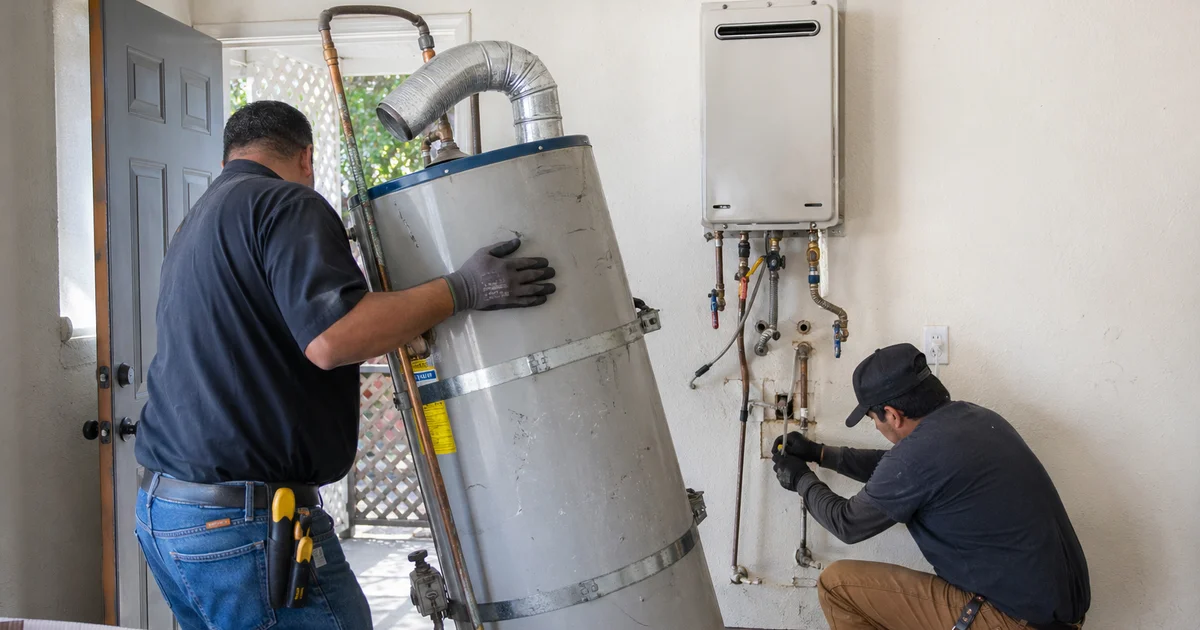
We see homeowners underestimate the scope of a first time tankless install every single week. Swapping an old tank for a new one is a basic plumbing chore. A true tank to tankless conversion is a major system overhaul.
Our team finds that understanding this difference saves everyone a lot of frustration.
It touches your gas line capacity, venting strategy, electrical service, and condensate drainage. Most people plan for a quick fix, but you should expect a full one-day project with several decisions required beforehand. We will walk through exactly what to expect when you convert tank to tankless systems.
What Makes Conversions More Involved
Conversions require much more work because your home’s original infrastructure was built for a low-demand tank, not a high-efficiency heater. Tank-to-tankless replacements demand serious upgrades to your gas delivery and exhaust systems.
We see five specific areas that mandate major structural changes during an upgrade:
- Gas line capacity: Most traditional water heaters use a 1/2 inch gas line that delivers around 40,000 BTUs. A modern tankless unit requires up to 199,000 BTUs, meaning you usually need a 3/4 inch gas line upgrade to meet US National Fuel Gas Code (NFPA 54) standards.
- Venting requirements: The existing metal B-vent simply does not work for a high-efficiency system. You need a completely new venting strategy using Schedule 40 solid-core PVC or specialized polypropylene piping.
- Wall mount locations: Installers often need to build new framing or install heavy-duty Unistrut anchors to hold the heavy new unit securely.
- Condensate drainage: Modern condensing units require a dedicated condensate drain to handle acidic runoff. Local inspectors will strictly enforce this rule to protect your cast iron plumbing pipes from corrosion.
- Permits and inspections: Every major structural change requires local municipal approval and a final safety sign-off.
These mandatory upgrades explain why a full conversion costs between $5,000 and $9,000 in the United States. A standard tank replacement usually sits much lower at $1,500 to $3,000.
Conversion Day Walkthrough
A typical installation day takes between 6 and 10 hours for a standard gas system conversion. You can expect a loud, busy environment while the crew replaces your plumbing, gas, and venting infrastructure.
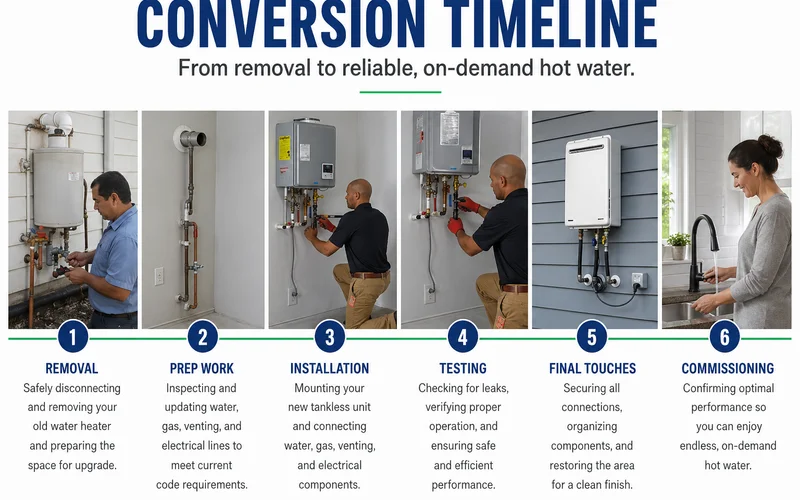
Our technicians follow a strict six-step process to keep the project on schedule. This structured approach ensures nothing gets missed during the chaotic transition.
| Step | Time | What Happens |
|---|---|---|
| 1. Old unit removal | 1 hour | Drain tank, disconnect gas/water, and haul out |
| 2. Gas line work | 2-4 hours | Run new 3/4 inch black iron or CSST line from the meter |
| 3. Vent installation | 1-2 hours | Install new Schedule 40 PVC or concentric vent termination |
| 4. Mount and connect | 1-2 hours | Secure wall anchor, then make water, gas, and vent connections |
| 5. Condensate drain | 30 min | Install calcium carbonate neutralizer and run pipe to a floor drain |
| 6. Commissioning | 1 hour | Perform pressure test and digital combustion analysis |
We highly recommend asking your installer about their specific commissioning process. Top-tier professionals use a digital combustion analyzer, like the Fieldpiece CAT85, to tune the gas valve perfectly.
This precise tuning prevents premature wear on the heat exchanger. Electric-to-gas conversions take even longer, as adding a completely new gas service line can extend the project by 4 to 8 hours.
Common Surprises (and How We Surface Them Up Front)
The three biggest surprises during a conversion always involve hidden gas line limits, venting constraints, or condensate drainage rules. Discovering these issues on installation day leads to massive delays and unexpected out-of-pocket costs.
We eliminate these shocks by catching them early in the planning phase.
Gas Line Undersize
Most existing 1/2 inch pipes physically cannot deliver the 199K BTU a typical tankless unit demands. Our process includes auditing your gas-line capacity during the virtual estimate so the upgrade cost appears in the initial quote.
You will not see surprise charges added on the day of the job. The gas line requirements guide breaks down the exact math required by the 2024 International Residential Code (IRC).
Vent Path Constraints
Reusing your old metal B-vent is structurally impossible and highly dangerous. New PVC or concentric venting systems have strict maximum run lengths dictated by the manufacturer.
If your basement installation location sits far away from exterior walls, routing the exhaust can easily become the most expensive part of the project. A standard 2-inch PVC pipe might only allow a 30-foot run once you account for the flow resistance of elbows and turns.
Condensate Routing
High-efficiency condensing units produce about one gallon of liquid per hour. This runoff has a highly acidic pH level of 3 to 4.
Code requires this liquid to pass through a neutralizing cartridge before hitting your floor drain or a dedicated condensate pump. This essential step adds $150 to $300 to the project total.
Permits and Inspection
Every legal tank-to-tankless upgrade requires multiple permits from your local building department. You cannot skip this step without risking massive municipal fines or voiding your homeowner insurance policy.
We handle this bureaucratic headache directly for our customers. Building codes across the United States generally mandate four distinct approvals for a safe installation.
- Gas-fitting permit: Required for any modification to your black iron or CSST gas lines under NFPA 54.
- Plumbing permit: Needed for the actual unit replacement and water line alterations.
- Mechanical permit: Mandated for routing new PVC exhaust pipes through your walls or roof.
- Final inspection: Involves a local official verifying the combustion test and pressure safety numbers.
Our partner installers file all local paperwork and coordinate the final inspector visits as part of the total project. Taking a DIY approach or hiring unpermitted labor immediately voids your manufacturer warranty from major brands like Rheem or Noritz.
Unpermitted work also gives insurance companies an easy excuse to deny claims if a water leak occurs later.
What You Should Be Doing Before Install Day
Preparation is the secret to a fast, stress-free installation experience. You can eliminate hours of labor costs by preparing your space and paperwork ahead of time.
We tell every customer to complete three specific tasks before the installation crew arrives:
- Clear physical access: Move boxes and furniture to create a clean three-foot working radius around both the old water heater and the new wall mounting spot.
- Confirm finishing preferences: Decide how you want exposed PVC pipes or gas lines to look if they have to cross visible walls in finished spaces.
- Have your rebate paperwork ready: Section 25C of the Inflation Reduction Act offers up to a $600 tax credit for qualifying high-efficiency gas units in 2026.
Many local utility companies offer additional cash rebates that you should claim. Your installer can usually pre-fill these specific applications to save you significant time. For full project economics including the gas-line, venting, and rebate offsets, read the tankless installation cost breakdown guide.
When you are ready to scope your conversion, our installation service starts with a free virtual estimate. Taking action now ensures your home stays supplied with endless hot water for decades.
Frequently Asked Questions
How long does a tank-to-tankless conversion take?
Will my warranty cover a botched conversion?
What surprises catch homeowners on first conversions?
Related Guides
Condensing vs Non-Condensing Tankless: Which Is Right?
Condensing tankless units run 90%+ efficient with cheap PVC venting; non-condensing are 80-85% with stainless flue. Total-cost-of-ownership math inside.
Electric to Gas Tankless Conversion (Cost & Process)
Electric-to-gas conversions are the most expensive scenario — typically adding $1K-$2K. Why it still pencils out, what's involved, and propane as an alternative.
Gas Line Requirements for Tankless Water Heater Installation
Tankless units need a 3/4 inch gas line in most cases — your existing 1/2 inch line probably won't work. Here's how to know if you need an upgrade and what it costs.
How to Choose a Tankless Water Heater Installer
Questions to ask, red flags to avoid, and certifications that matter when picking a tankless installer. Why the cheapest quote is usually a warning.