
Tankless Water Heater Venting Requirements
Why your old B-vent doesn't work for tankless. PVC vs concentric venting explained, max run lengths, ideal install locations, and condensate drainage.
6 min read
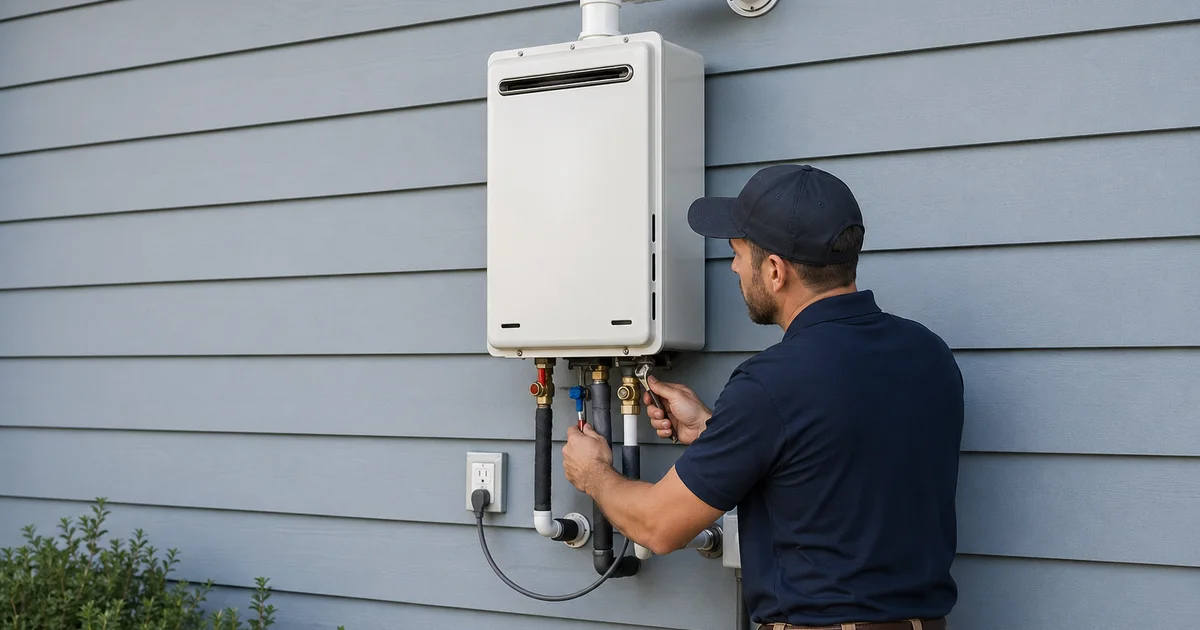
We have noticed that meeting specific tankless water heater venting requirements is the exact spot where installation plans hit unexpected hurdles.
The old B-vent from your traditional tank water heater will not carry over to a new tankless model, regardless of the brand you choose. This happens because modern units operate at vastly different temperatures and require specialized tankless vent pipe materials to match.
Our installation team knows that handling these changes can feel overwhelming at first. Next, the guide will break down why B-vents fail, compare PVC vs concentric venting, and walk through the best installation locations to keep your costs down.
Why B-Vent Doesn’t Work
We frequently get asked why a perfectly good metal pipe has to be torn out during an upgrade. The answer is that modern tankless units produce exhaust gases that are either too corrosive or too hot for traditional galvanized double-wall metal pipes to handle safely.
Standard tank water heaters use a Type B vent, which is a galvanized double-wall pipe sized for the relatively low flue output of a 40,000 BTU/hr burner. Tankless technology changes both ends of the temperature spectrum, rendering that old pipe obsolete.
Our specialists always point to the strict requirements of the National Fuel Gas Code (ANSI Z223.1/NFPA 54) in the US. This code dictates that the venting material must match the specific exhaust characteristics of your new appliance.
Condensing Unit Temperatures
Condensing tankless water heaters are incredibly efficient, meaning their flue gas exits at a very cool 110 to 150 degrees Fahrenheit. This temperature sits just above the water vapor point, which causes acidic water to condense directly inside the vent.
We have seen this acidic liquid, which typically carries a highly corrosive pH level between 3.0 and 4.5, eat right through standard galvanized B-vent pipes in a matter of months. To stop this rapid corrosion, you will need to install Schedule 40 PVC or an approved Polypropylene venting system.
Non-Condensing Unit Temperatures
Non-condensing tankless water heaters swing the other direction, with flue gases exiting between 300 and 500 degrees Fahrenheit. That level of heat is far hotter than traditional B-vent materials are rated to handle.
Our safety protocol requires the use of a stainless steel Category III concentric vent for these high-temperature applications. Either way, the original B-vent has to come out, and a completely new vent strategy goes in.
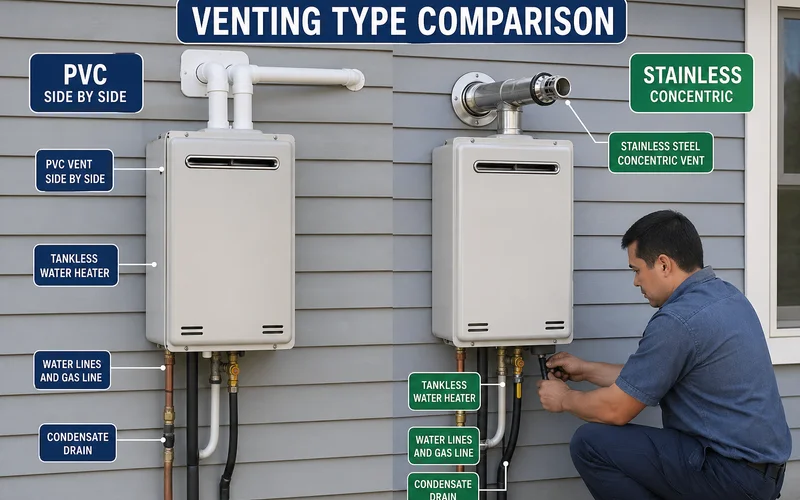
PVC vs Concentric Stainless
We know that choosing the right pipe material heavily influences your total project budget. The decision strictly depends on whether you select a condensing or a non-condensing water heater.
Condensing units use standard Schedule 40 PVC, which is dramatically cheaper and easier to install over long runs. This cost advantage is exactly why condensing models, like the popular Navien NPE-2 series, have become the dominant choice in US residential installations.
Our data shows that the savings on PVC venting often offset the initial $300 to $700 price premium of the condensing unit itself. Conversely, concentric stainless venting is mandatory for non-condensing units because their extremely hot flue gas will literally melt plastic pipes.
| Factor | Schedule 40 PVC | Concentric Stainless |
|---|---|---|
| Cost per foot | $3 to $8 | $25 to $40 |
| Brand requirement | Condensing units | Non-condensing units |
| Max run length | 75 to 150 ft typical | 40 to 65 ft typical |
| Install difficulty | Easy (cuts and glues) | Moderate (specialty fittings) |
| Combined intake/exhaust | Two separate pipes | Single concentric pipe |
| Condensate handling | Pitched with drain | Not required |
Concentric pipes are harder to snake through finished walls and cost significantly more per foot. A brand-name termination assembly, like a Rinnai 21-inch horizontal vent kit, currently runs about $90 to $100 just for the exterior cap.
We still recommend the concentric option when routing a liquid condensate line is simply not practical for your floor plan. The dual-pipe design pulls fresh intake air through the outer chamber while pushing hot exhaust through the inner core, which brilliantly keeps the exterior cool to the touch.
Max Run Length Math
We always check the manufacturer specifications first, because your pipe’s total equivalent length dictates how hard the internal fan must work to push exhaust safely outside. Exceeding these specific footage limits will cause the water heater to shut down or fail prematurely.
Modern high-efficiency units have dramatically improved these maximum allowances over the past few years.
Our crews work with these updated limits daily. For example, the current Navien NPE-2 series allows up to 75 feet on a basic 2-inch PVC line. If you upgrade to a 3-inch PVC pipe, that maximum reach extends all the way to 150 feet.
- 2-inch PVC: Up to 75 ft equivalent length (deduct 8 ft per 90-degree elbow).
- 3-inch PVC: Up to 150 ft equivalent length (deduct 5 ft per 90-degree elbow).
- 2-inch / 4-inch Concentric: Up to 65 ft equivalent length on premium units like Rinnai.
Long horizontal runs and sharp turns eat away at your total capacity fast.
We calculate equivalent length by adding the straight pipe to the penalty for every fitting. A 25-foot physical run with three 90-degree elbows on a 2-inch PVC line equals 49 feet of equivalent length, which is well within the 75-foot limit of newer models but might max out an older unit.
Ideal Install Locations
We base our ideal install locations directly on tankless venting simplicity, as this is the biggest driver of total project cost. The shorter and more direct your vent route is, the less you will pay for materials and labor.
US building codes also dictate placement, requiring the exterior vent termination to sit at least 12 inches above the ground level or the expected snow line.
Our technicians rank the best to worst locations based on these strict clearance rules and practical routing.
- Exterior wall in a garage: This setup allows for a direct through-wall vent with the absolute shortest run possible.
- Exterior wall in a finished room: This offers the same direct-vent advantage, though it might require some cosmetic drywall framing work.
- Interior basement near a rim joist: The vent easily runs up and straight out through the wooden rim joist.
- Interior closet on the first floor: The vent must travel vertically up through the ceiling and safely penetrate the roof.
- Interior basement away from exterior walls: This requires massive pipe runs and complex routing, resulting in a very high installation cost.
Install location often dictates the total project cost far more than the actual brand or unit choice.
The layout review is a critical step in the initial consultation. Our installation service walks the venting route during the virtual estimate to guarantee all clearances are met.
Condensate Drainage (Condensing Units Only)
Managing liquid runoff carefully is mandatory when installing high-efficiency heaters. A condensing tankless unit produces 0.5 to 1.0 gallon of highly acidic condensate per hour at peak operation.
This constant drip has a pH level similar to soda, which is potent enough to corrode cast iron pipes and permanently damage concrete foundations.
Our local US building codes usually require this liquid to be treated before it enters the municipal sewer or your private septic system. The fluid must drain safely through two key components.
- A condensate neutralizer: This is a limestone-filled cartridge that chemically neutralizes the harmful acidity.
- A safe disposal route: This includes routing the treated water to a floor drain, a condensate pump, or a laundry utility drain.
We typically use industry-standard cartridges, like the JJM CBM-225 or Rheem RTG20239BU, which cost around $60 to $75 for the replacement media. This essential plumbing step adds roughly $150 to $300 to the initial installation cost.
Our maintenance plans always include inspecting this neutralizer, as the calcium carbonate media needs an annual replacement to stay effective. For the technical decision on which unit type fits your home best, see our condensing vs non-condensing guide.
We know that sorting through building codes and pipe capacities feels overwhelming for most property owners. The right venting setup protects your property from harmful exhaust gases and guarantees your new water heater runs efficiently for decades. Proper planning requires precise measurements and a deep understanding of local US plumbing regulations.
Our team is ready to evaluate your space and recommend the safest, most cost-effective tankless water heater venting requirements for your specific layout. Schedule a virtual estimate today, and let a professional take the guesswork out of your upcoming installation.
Frequently Asked Questions
Can I reuse my old water heater's vent?
How far can tankless venting run?
Why is exterior wall the preferred install location?
Related Guides
Condensing vs Non-Condensing Tankless: Which Is Right?
Condensing tankless units run 90%+ efficient with cheap PVC venting; non-condensing are 80-85% with stainless flue. Total-cost-of-ownership math inside.
Electric to Gas Tankless Conversion (Cost & Process)
Electric-to-gas conversions are the most expensive scenario — typically adding $1K-$2K. Why it still pencils out, what's involved, and propane as an alternative.
Gas Line Requirements for Tankless Water Heater Installation
Tankless units need a 3/4 inch gas line in most cases — your existing 1/2 inch line probably won't work. Here's how to know if you need an upgrade and what it costs.
How to Choose a Tankless Water Heater Installer
Questions to ask, red flags to avoid, and certifications that matter when picking a tankless installer. Why the cheapest quote is usually a warning.